
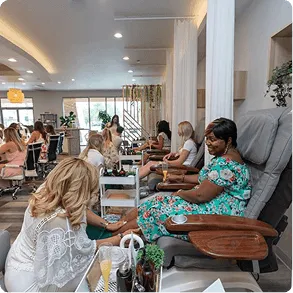
I'm Lanna, owner of Pamprd Soul, a non-toxic nail salon in Scottsdale, Arizona. I've spent years thinking about what actually makes a nail salon "good," not just from a business owner's perspective, but from a client's perspective too. So before I get into the checklist version of this post, I want to explain why I care about this topic so much in the first place.
Why I Care So Much About What Goes Into a Manicure
I've always been health conscious and mindful of what goes onto and into my body. Several years ago I started using only clean, minimal-ingredient body products and makeup. Since then, I've become genuinely sensitive to products loaded with synthetics and harsh chemicals. It was always important to me that Pamprd Soul offered non-toxic options, and we've had them for a few years now. Last year, we made the decision to go further and fully transition the entire salon toward cleaner brands. We're almost all the way there. The last piece we're still working through is gel polish, since that category is genuinely harder to source clean.
Here's the honest reason this matters to me: I built the salon I would want to visit if it didn't already exist. A conscious business that actually cares about the quality of what it puts on its clients. I know firsthand that most salons use ultra-cheap, mass-produced products, often sourced from overseas, that prioritize cost over anything else.
That was confirmed for me recently in the most direct way possible. I got a pedicure at a newer, trendy spot nearby that was getting a ton of hype from influencers. It was disappointing. The moment I saw the lotion, scrub, and mask come out, I could tell they weren't quality products. They were dyed with artificial coloring, a bright, unnatural neon green. After I got home, I was sitting at my desk and had to get up and rinse my legs with soap and water because the strong, cheap, artificial fragrance was bothering me that much. That experience is exactly why I believe it's so important to have a truly non-toxic nail spa, and why I wanted to write this post.
What "Non-Toxic" Actually Means (And Why Most Salons Aren't)
A lot of the harsh chemicals still common in standard gel polishes and removers have been shown to be hormone disrupting, linked to reproductive issues, and in some cases carcinogenic. There are also plenty of documented cases of allergic reactions, things like skin irritation and redness, tied to ingredients such as HEMA and other monomers.
Here's the tricky part: many brands now market themselves as "clean" or "non-toxic" when they really aren't. In skincare, there are a lot of wonderful, reputable clean brands to choose from. Nail products are a different story entirely. It was genuinely challenging to find nail products, gels especially, that were cleaner while still performing at a professional level. There's no point in using a clean product if it falls off a client's nails in two days. Balancing genuinely body-healthy ingredients with real performance is hard, which is part of why we ended up sourcing many of our products from Europe. European regulations are stricter about which ingredients are allowed in the first place, so it's a more reliable starting point for finding products that are both clean and effective. (I went deeper on the specific chemicals to avoid in What Makes a Nail Salon Truly Non-Toxic?)
What Happens Behind the Scenes at a Truly Clean Salon
Most clients never see what actually goes into sanitation, and it's worth knowing what a well-run, health-conscious salon is doing behind the scenes.
At Pamprd Soul, we strictly follow Arizona State Board mandates. Every implement is scrubbed with soap and water before being disinfected in a hospital-grade solution. Once cleaned, implements are sealed and packaged, and they're only opened in front of the client at the start of their service, so there's real peace of mind that what's being used on them hasn't been sitting out or reused.
On the product side, sourcing is its own challenge. It takes real diligence to separate brands that are genuinely clean from brands that are just using the word as marketing.
Red Flags and Green Flags You Can Spot Yourself
Before You Book, Online
If a salon uses the word "organic" in their name or the names of their services, be a little skeptical. Look into whether they actually use organic products, and which brands specifically. It's also worth asking yourself what "organic" even means to them, since the word gets used loosely.
A better signal is whether their website talks about why certain products matter to them, or why they chose to go a more elevated route in the first place. What drove that decision? What's their background? Conscious businesses almost always have a real story behind why they made that choice. If a salon can't articulate one, that tells you something.
When You Walk In
Pay attention to how organized the space actually is. Are chairs and service carts scattered everywhere? Look closely at the pedicure carts specifically. Are the bottles messy? Is there trash, or used implements left open and dirty? Are polish bottles just left out everywhere?
To be fair, you might catch a salon mid-service, when things haven't been tidied up yet. That's normal. What you're really watching for is whether that's a one-off moment or a pattern. Also watch how staff turn over a station or chair between clients. Do they clean and wipe everything down, and if so, how thoroughly? That single habit tells you a lot about a salon's actual standards versus what they claim.
How Much Should You Trust Influencer Hype?
It really depends on what you're looking for. If you want a fun, unique experience, things like steamers, fresh fruit on your legs, or even a full smoothie bar, some of these newer, buzzy salons can absolutely deliver that. There are some genuinely fun, exciting services out there right now. Just know that "exciting" and "high quality" aren't the same thing.
That $90 pedicure I mentioned earlier is a perfect example. It had all the bells and whistles, but strip those away and the actual pedicure was subpar. The massage was maybe a 3 out of 10, and my polish wasn't even applied evenly, it started chipping within a week.
So if you're shopping for an experience, go have fun with it. But if you're looking for real quality, or trying to find a salon you'll return to regularly, do a little more due diligence first:
- Check how far back their reviews go, not just the most recent ones
- Read the actual reviews. Do they all sound strangely similar, almost like they could be bots?
- Look for a real website, and see what actual customers are saying about the specific things that matter to you
Does Price Actually Tell You Anything?
Not always, and this surprises people. That disappointing $90 pedicure I keep referencing is proof that a higher price tag doesn't guarantee quality.
That said, price isn't meaningless either. Geographic location plays a real role, since rent and cost of living in an area directly affect what a salon has to charge, which in turn affects staff wages. Generally speaking, salons that pay their staff well and invest in genuinely quality products are going to have higher prices overall. So price can be a reasonable signal, just not a reliable one on its own. It's one data point, not the whole picture.
Questions to Ask Before You Book
A quick phone call or message can reveal a lot more than a website ever will. Two questions I'd recommend asking:
- How does this salon clean and sanitize their implements?
- Do you use clean or non-toxic products? If they say yes, ask them what specific ingredients they make sure to avoid.
That second question matters more than it seems. Anyone can say "yes, we're clean." Far fewer salons can actually name what that means in practice. If they can rattle off specific ingredients they exclude, that's a real sign they know what they're talking about, not just repeating a marketing line.
My Honest Opinion on the Industry
There's a place for everyone in this industry, and not every salon needs to be non-toxic, because not everyone prioritizes that. Some salons offer faster, more cost-friendly service and still do a genuinely decent job. Meanwhile, some of us care more about the products used, and the quality and detail of the service, than about speed. We built Pamprd Soul to serve that second type of client.
What genuinely bothers me is when businesses pretend to be something they're not. False advertising, marketing gimmicks, fake reviews, that kind of thing is just shady business practice, and honestly, it reads as low class. My hope for anyone reading this is that you don't fall for it.
Define Your Own Non-Negotiables First
If you take one thing away from this post, let it be this: figure out what values actually matter to you, and get clear on what that looks like in practice, before you go looking for a salon.
For me, customer service has always been a top value. It's not just about whether a salon uses high-quality products, it's about whether I feel genuinely cared for while I'm in their space. Are the staff actually engaged? Am I being sold to aggressively, or treated like a person? I don't respond well to pushy sales tactics, and I doubt I'm alone in that.
If speed is what matters most to you, that's a completely valid priority too. Just make sure to ask how long a service will take, and let the salon know upfront if you need to be out by a certain time.
The goal isn't to find the "objectively best" salon. It's to clearly define your own non-negotiables first, and then go looking for the salon that actually meets them.
If you're local, my checklist of seven things to look for in a Scottsdale nail salon pairs well with this post. And if your non-negotiables sound anything like mine, you're always welcome at Pamprd Soul — explore our services and meet the team.